Business5 min read
Why Your Restaurant Needs a QR Digital Menu System in 2026
I built TapMeal after watching one too many waiters juggle twelve tables with a notepad. Here's why a real QR ordering system — not a PDF behind a QR code — pays for itself, and what it changes for the kitchen, the staff, and the customer.
There is a café near me in Karachi where I have watched, more times than I can count, one waiter work twelve tables with a notepad. He is genuinely good at it — and he is still the bottleneck for every single order in the room. Someone wants to order, they wave. He is taking another order, they wait. He writes it down, walks it to the kitchen, walks back, and somewhere in that loop the extra chai gets forgotten and table nine's order arrives wrong.
I did not build TapMeal because QR menus were trendy. I built it because that loop — human legs carrying handwritten tickets between tables and a kitchen — is the single most expensive, error-prone process in most restaurants, and by 2026 there is no longer a good reason for it to exist.
First, an apology on behalf of QR menus
I know what you might be picturing, because 2020 ruined this for everyone: you scan a code and get a blurry, pinch-to-zoom PDF of the paper menu. Then you flag down a waiter and order verbally anyway. That is not a digital menu system — that is a photocopier with extra steps, and customers are right to hate it.
A real QR ordering system is a different animal entirely. The customer scans, browses an actual interactive menu in their browser, and places the order themselves. The kitchen sees it instantly. Nobody waves at anybody. The difference matters enough that it is worth a table:
| Paper menu | PDF behind a QR | QR ordering system | |
|---|---|---|---|
| Placing an order | Wait for the waiter | Still wait for the waiter | Customer orders from their phone |
| Order errors | Misheard, mis-written | Same as paper | Customer types it — errors nearly vanish |
| Changing prices or 86'ing a dish | Reprint everything | Re-export, re-upload | Edit once, live everywhere in seconds |
| What you learn | Nothing | Nothing | Best sellers, busiest hours, revenue per table |
What actually changes when orders go digital
- Order errors collapse. When the customer types their own order — spice level, no onions, extra raita — nothing gets misheard over a noisy dining room. The most common complaint in the business ("this isn't what I ordered") mostly disappears.
- Your staff does higher-value work. Waiters stop being order-carriers and start being hosts: delivering food, checking on tables, upselling desserts. One person genuinely covers more tables without the service feeling worse.
- The menu becomes a live thing. Ran out of fish at 9pm? Toggle it off from your phone and no customer orders it at 9:05. New prices? Changed in seconds, no reprinting, no stickers over old numbers.
- You finally get data. Every restaurant owner I have met knows their best seller by gut feel. A digital system shows you the real one — plus the hour your kitchen actually gets slammed, and which table brings the most revenue.
- Tables turn faster. The dead minutes — waiting to order, waiting for the bill conversation — compress. Even a few minutes per table per seating is a real number by the end of a Friday.
The customer side: nobody installs anything
This part I am genuinely opinionated about, and it shaped TapMeal's architecture. Forcing a hungry customer to download an app to see your menu is how you lose the table. In TapMeal, the QR opens the menu straight in Safari or Chrome — no install, no account, no login. They browse at their own pace, order when ready, and watch the order status update live in the same browser tab. The friction budget for a restaurant customer is about four seconds, and a web menu is the only thing that fits inside it.
How TapMeal does it (the honest tour)
TapMeal is three apps sharing one Firebase backend, because a restaurant is really three different users wearing three different hats. The owner runs everything from a React Native app on their phone — live order board, menu editing, staff roles, analytics. The customer gets the zero-install web menu. And the kitchen gets a display mode built for a wall tablet: incoming tickets, big type, no fingerprints-on-a-greasy-phone problem.
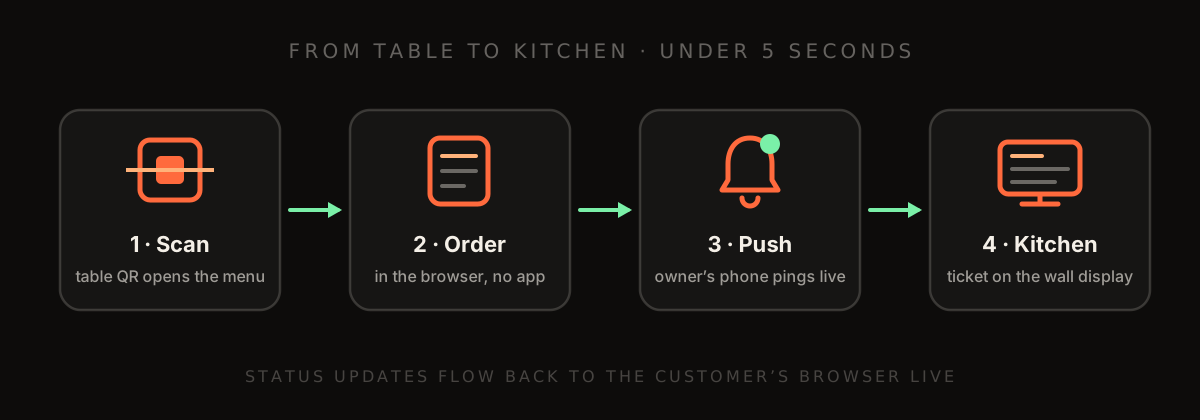
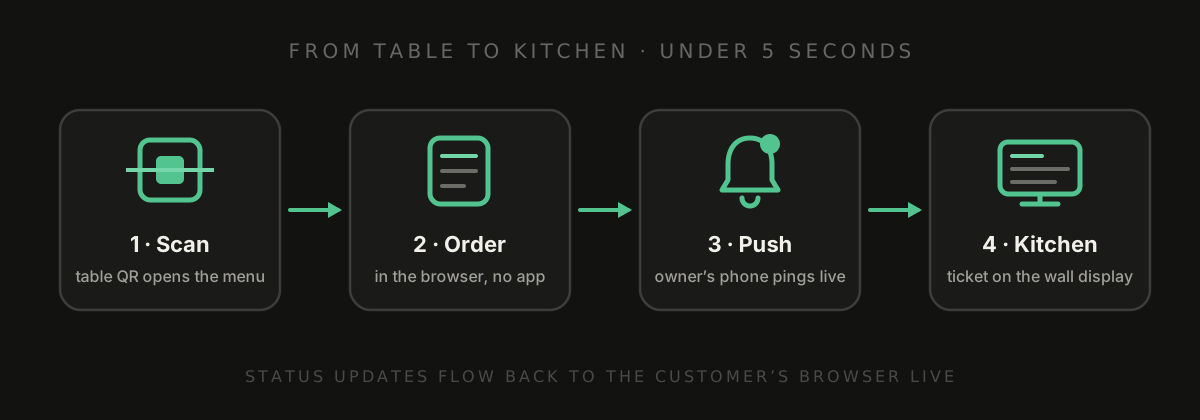
The flow end to end: customer scans the table's QR → menu loads in their browser → they order → a push notification lands on the owner's phone immediately → accepted orders appear on the kitchen display → status flows back to the customer's screen. Under five seconds, fully automated. The table QR codes themselves are generated offline inside the admin app — no third-party QR service, no subscription for something a phone can do by itself — and you can print an A4 sheet for every table in one tap.
Try it, buy it, or build on it
I have deliberately made TapMeal available at every level of commitment. If you own a restaurant, the app is live on Google Play — set up your menu, print your QR sheet, and you are taking digital orders the same afternoon. You can poke around the product at tapmeal.anwersolangi.com first.
If you are a developer or an agency, the full TypeScript source code — all three apps, Firestore security rules, EAS build config, and the documentation — is on CodeCanyon, with an extended license if you want to white-label it or run it as your own SaaS for restaurant clients. It is also available on Gumroad if that is your preferred storefront. Multi-tenant out of the box, so one deployment serves unlimited restaurants.
And if you want something like this but shaped around your own restaurant chain or market — that is the kind of project I take on. The notepad guy deserves better tools. So does whoever is paying his salary.
Building an app? Let’s talk.
I’m a senior React Native developer in Karachi with 50+ shipped apps. I write these posts the same way I build: no filler.