React Native4 min read
React Native in 2026: What Actually Changed, and What I'd Bet On
The bridge is dead, Expo won, and the New Architecture is just... the architecture now. A working developer's honest read on React Native in 2026 — what got better, what still hurts, and where I'd place my bets.
I shipped my first React Native app around six years ago, and I remember exactly what the ceiling felt like. You would build a screen, it would run beautifully in the simulator, and then a mid-range Android phone would remind you that every tap was being serialised into JSON, shipped across a bridge, and deserialised on the other side. We wrote entire architectures around hiding that latency.
If you left React Native around 2022 and came back today, the framework would feel familiar. The workflow would not. Almost everything that defined "React Native problems" back then has either been fixed or quietly deleted from the codebase. Here is my honest read on where things stand in mid-2026 — as someone who builds client apps with this thing every week, not someone selling a course.
The old architecture is actually, finally gone
This is the headline. The New Architecture became the default back in 0.76, but defaults are polite suggestions — plenty of teams flipped the flag back. Then 0.82 removed the opt-out entirely, and with 0.83 the legacy architecture isn't deprecated, it's deleted. The bridge is not something you avoid anymore. It does not exist.
If the jargon never stuck for you, the practical summary is short. JSI lets JavaScript call native code directly instead of throwing JSON messages over a wall. TurboModules load native modules lazily and synchronously when you actually need them. Fabric renders UI with the ability to do synchronous layout reads — which is why measuring a view no longer involves a callback and a prayer.
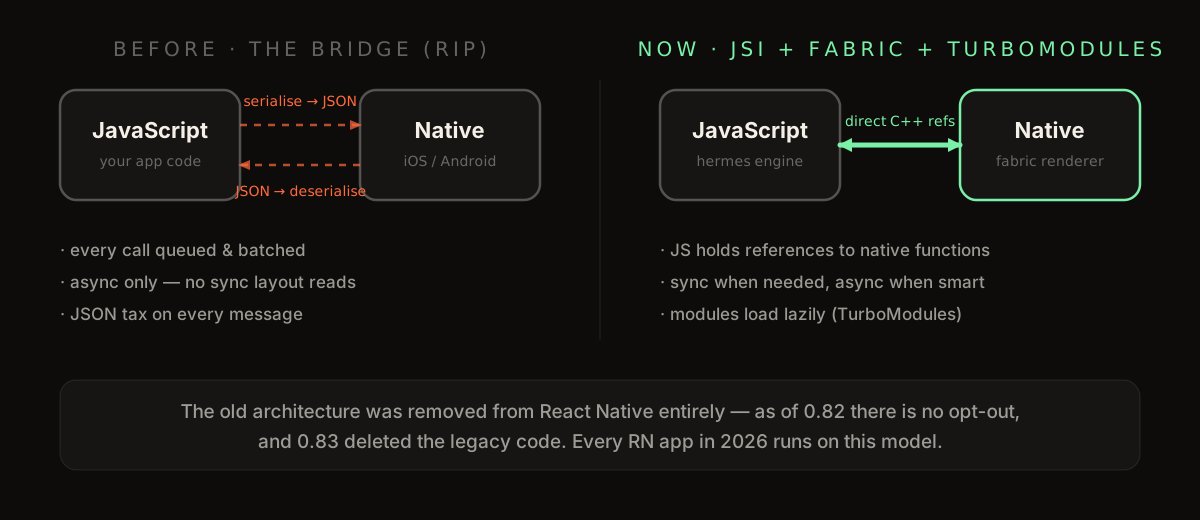
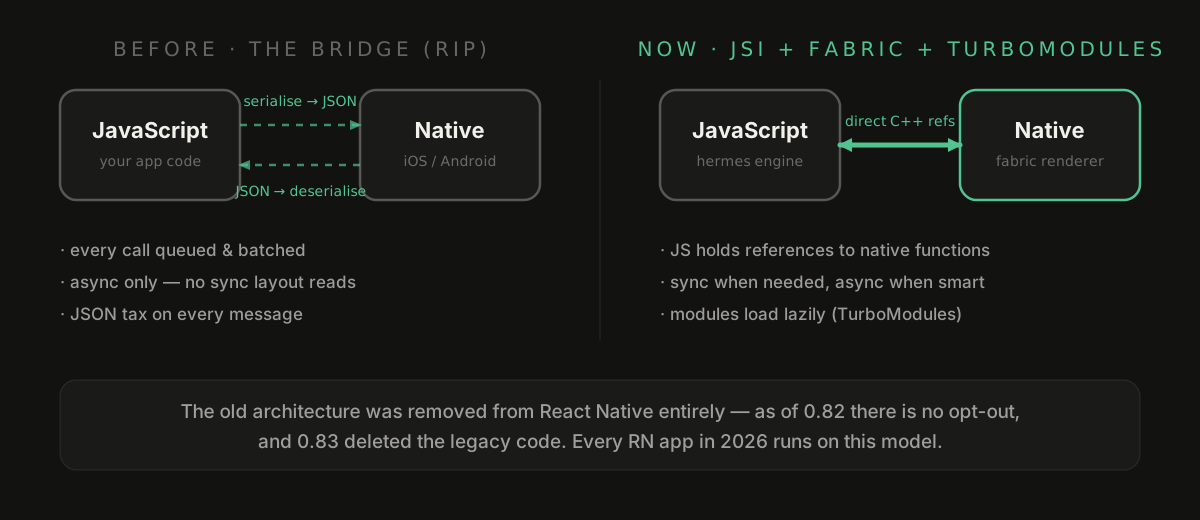
Does it matter in practice? Yes, and I say that grudgingly, because I ignored the migration for as long as I could. Cold starts are visibly faster with Hermes as the default engine on both platforms. Lists that used to need removeClippedSubviews incantations just scroll. The "blank flash while the JS thread wakes up" class of bug — the one clients always noticed in demos — has mostly evaporated from my bug trackers.
Expo stopped being training wheels a while ago
There was a period when "real" React Native developers were supposed to eject from Expo the moment things got serious. That advice is now actively bad. Expo is the officially recommended way to start a React Native app, SDK 55 tracks the newest runtime, and config plugins cover the native-code cases that used to force an eject.
My own rule for client work in 2026: every project starts with Expo, no exceptions, and EAS handles the builds. I only go bare when a project has unusual native demands — a custom camera pipeline, exotic Bluetooth hardware, that category. In five years of freelancing that has happened maybe three times. The rest of the time, Expo's constraints are a feature: fewer decisions, faster first build, and over-the-air updates when a client finds a typo an hour after release.
The ceiling on UI quality moved
The thing I care most about — the reason my reels exist — is how much UI craft the framework lets you get away with. Reanimated running animations on the UI thread plus Skia drawing straight to the GPU means the old excuse ("that's a native-only effect") is nearly extinct. Gesture-driven springs, shader effects, canvas-level drawing: all of it runs at full frame rate from JavaScript-land now.
What still hurts (nobody's paying me to pretend otherwise)
- Upgrades. Better than the 0.6x days, still the least fun part of the job. I budget real hours for every major bump, and so should you.
- Native build times. Metro is fast; Xcode and Gradle are the tax you pay at the border. EAS softens this, doesn't remove it.
- The library long tail. The big libraries migrated to the New Architecture long ago — the large majority of popular packages are compatible — but niche ones still bite. I check compatibility before installing anything, every time.
- Debugging native crashes. When something dies below the JavaScript line, you are reading a native stack trace whether you like it or not. This is the real argument for having someone senior on the team.
What I'd bet on for the rest of 2026
On-device AI is the obvious one — small models running locally for transcription, summarisation, and vision are already showing up in client briefs, and the JSI makes wiring them in far less painful than it would have been in the bridge era. I would also bet on brownfield adoption growing: dropping React Native screens into existing native apps got dramatically saner, and big companies quietly love that path. React Server Components on native? Interesting, experimental, and I would not architect a production app around them yet.
So, should you pick React Native in 2026?
If your team knows JavaScript and your app is not a 3D game or a hardware-first product — probably, yes. But that decision deserves more than a probably, which is why I wrote a separate, honest guide: how to choose between React Native, Flutter, and native. And if you would rather just talk it through with someone who ships this stuff weekly, that is literally my job.
Building an app? Let’s talk.
I’m a senior React Native developer in Karachi with 50+ shipped apps. I write these posts the same way I build: no filler.